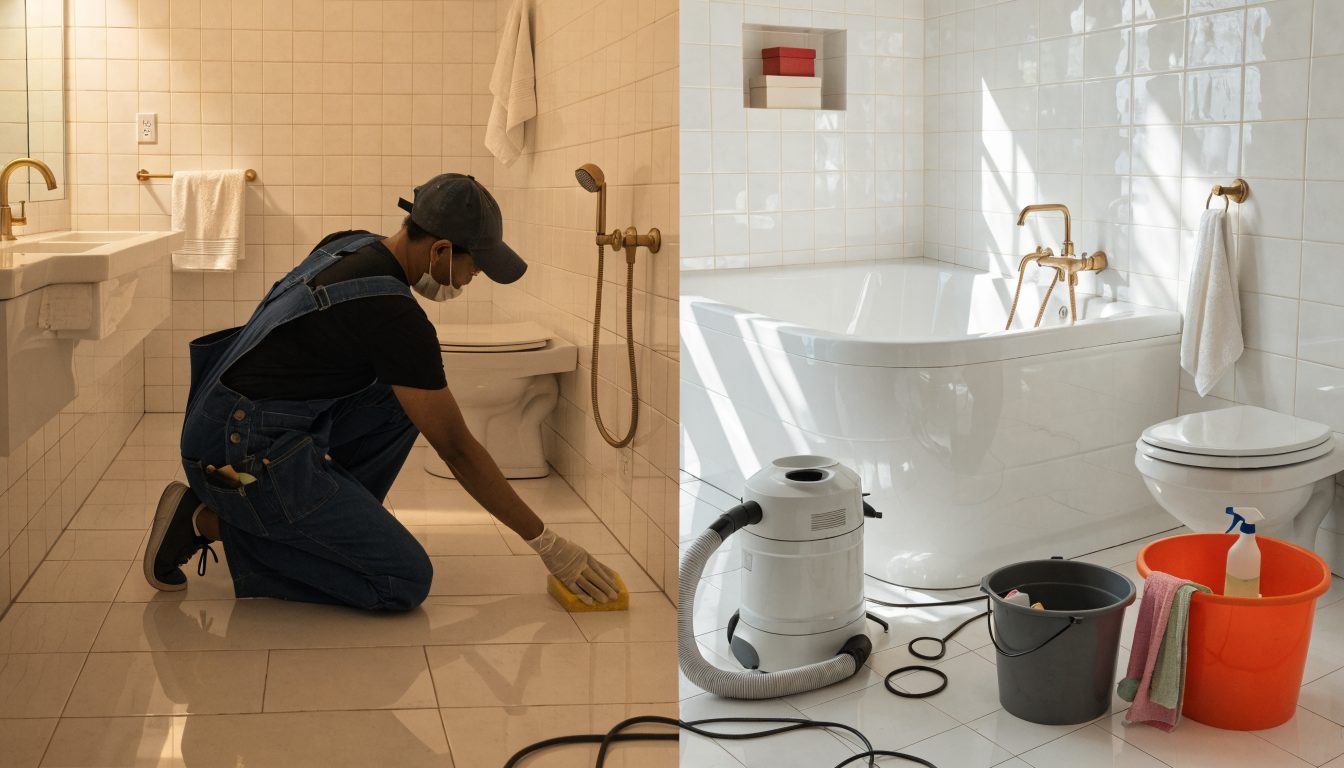
For most grout, a paste of baking soda and water (or hydrogen peroxide for tougher stains) applied and scrubbed with a stiff nylon brush, left to sit 10–15 minutes, then rinsed, removes the majority of everyday staining safely. Avoid vinegar or other acidic cleaners on natural stone tile, and avoid abrasive metal brushes on any grout, which can wear away the material itself rather than just removing surface staining.
Why Grout Stains So Much More Than Tile
Tile is typically glazed and non-porous, which is why it wipes clean easily. Grout is the opposite — it's a porous, cement-based material by design, which means it absorbs moisture, soap residue, and dirt rather than letting them sit on the surface. That absorption is exactly why grout discolors faster than the tile around it, and why surface wiping alone rarely restores it.
The Safe, Effective Cleaning Method
- Make a baking soda paste. Mix baking soda with a small amount of water into a thick paste and apply it directly along the grout lines.
- For tougher stains, add hydrogen peroxide. Instead of water, mix the baking soda with hydrogen peroxide for a stronger, still-safe stain-lifting reaction — this combination is particularly effective on mildew staining.
- Let it sit. Give the paste 10–15 minutes of contact time before scrubbing; this is what allows it to actually lift embedded staining rather than just sitting on the surface.
- Scrub with a stiff nylon brush. An old toothbrush works for small areas; a dedicated grout brush is worth it for a full bathroom or kitchen floor.
- Rinse thoroughly. Residual paste left in the grout lines can attract new dirt if not fully rinsed away.
What to Avoid
- Avoid vinegar or other acidic cleaners on natural stone tile. Acid can etch marble, travertine, and similar stone surfaces even if the grout itself would tolerate it fine.
- Avoid metal brushes or scouring pads. These can physically wear away grout over repeated use, widening lines and making future staining worse, not better.
- Avoid oversaturating grout with water. Because grout is porous, excess water can seep beneath tile and, over time, contribute to mold growth or loosened tile.
- Avoid bleach on colored grout. Bleach can lighten colored grout unevenly, creating a patchy look that's hard to correct.
Preventing Future Staining
Sealing grout — a straightforward DIY step or a low-cost professional service — creates a protective barrier that significantly slows how quickly new staining sets in. For high-moisture areas like shower floors, resealing every 1–2 years is a reasonable maintenance interval. Between cleanings, a daily squeegee on shower tile after use meaningfully reduces the moisture exposure that drives most grout discoloration.
Ready to Skip Straight to Clean?
Our insured, background-checked team handles it — get a free, firm quote based on your actual home, usually within one business hour.
Get Your Free Quote