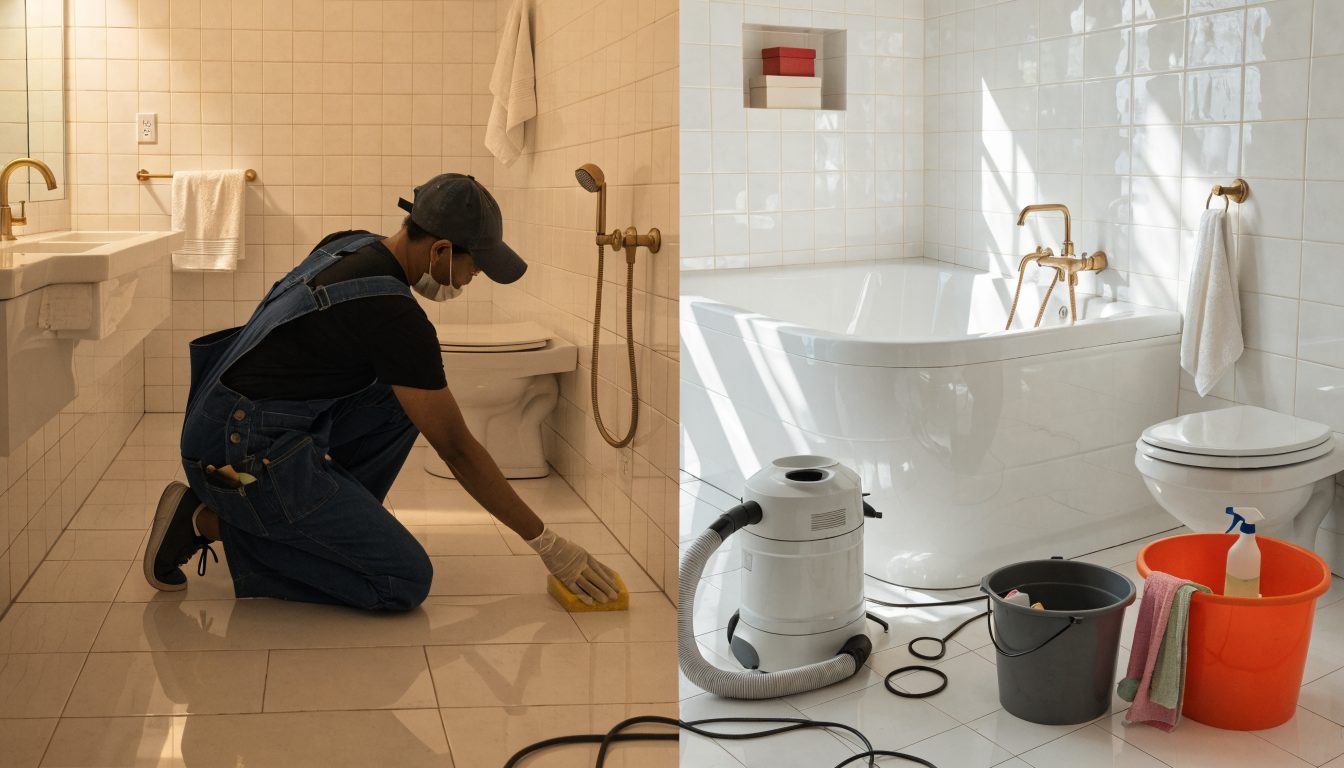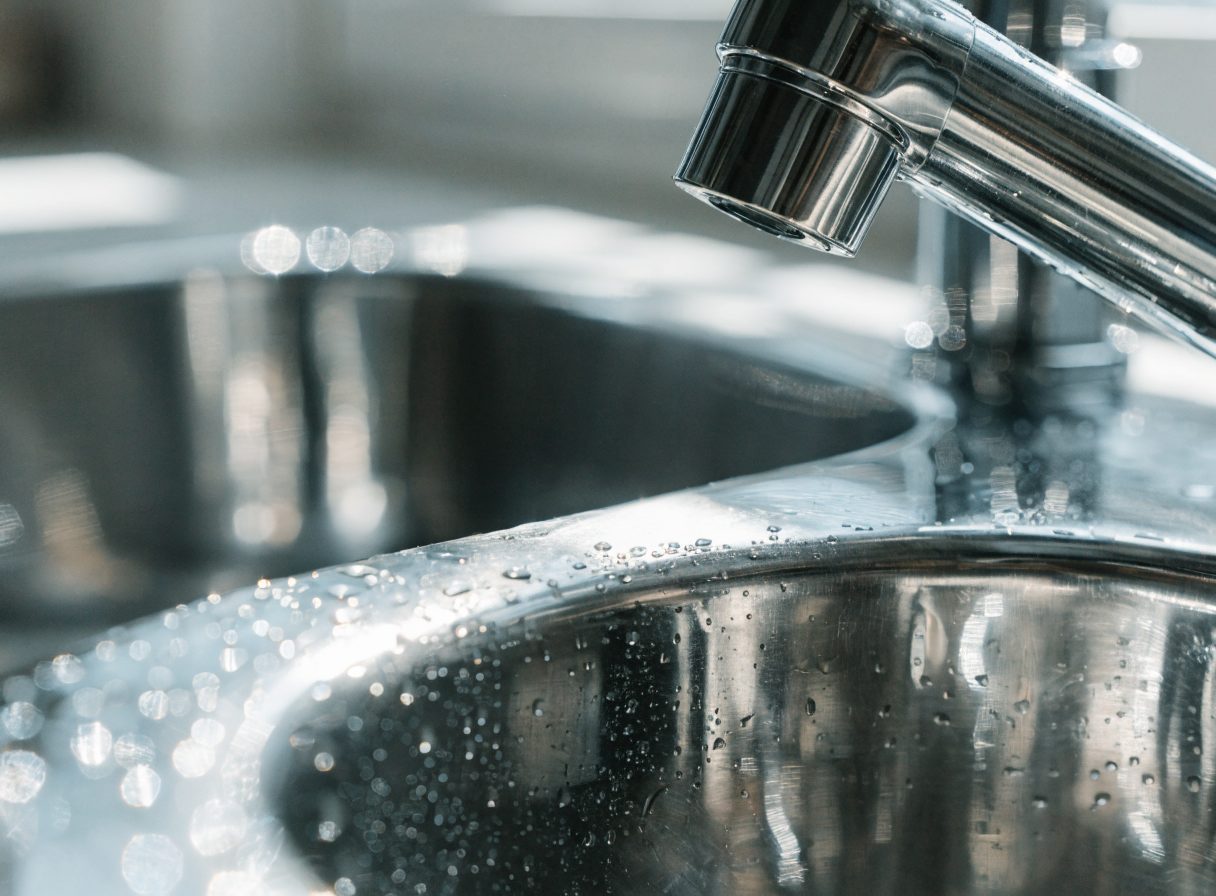
Hard water stains are mineral deposits, not dirt, which is why regular soap-based cleaners don't remove them — you need an acidic cleaner (vinegar, or a commercial descaling product) to actually dissolve the mineral buildup. Spray full-strength white vinegar on the affected area, let it sit for 10–15 minutes (longer for heavy buildup), then scrub with a non-scratch pad and rinse. For fixtures, a vinegar-soaked cloth wrapped around the fixture works better than spraying.
Why Central Indiana Water Leaves These Stains
Much of Central Indiana's municipal and well water carries a meaningfully high mineral content — primarily calcium and magnesium — which is what water treatment professionals classify as "hard water." Every time hard water evaporates on a surface, it leaves behind the dissolved minerals it was carrying, which build up over time into the cloudy, chalky-white film you see on shower glass, faucets, and around drains.
This is fundamentally different from dirt or grime, which is why regular dish soap or all-purpose cleaner often seems to do nothing — those products aren't formulated to dissolve mineral deposits, only organic residue.
The Method That Actually Works
- Use an acidic cleaner. White vinegar is the most accessible option and works well for most residential buildup. For heavier deposits, a commercial descaling product with citric or sulfamic acid works faster.
- Apply and let it sit. Spray full-strength (undiluted) vinegar directly onto the stained surface and let it sit for 10–15 minutes — longer, up to an hour, for heavy buildup. The acid needs contact time to dissolve mineral deposits, not just a quick wipe.
- For fixtures, wrap instead of spray. Soak a cloth or paper towel in vinegar and wrap it directly around faucets or showerheads, securing with a rubber band, so the acid stays in contact with the surface longer than a spray allows.
- Scrub with a non-scratch pad. Once the deposits have softened, a non-abrasive scrub pad removes them without scratching glass or fixture finishes.
- Rinse thoroughly. Residual vinegar left on the surface can leave its own film if not rinsed completely.
What Not to Do
- Don't use abrasive scrubbers on glass shower doors. They can create micro-scratches that actually trap future mineral buildup more easily, making the problem worse over time.
- Don't mix vinegar with bleach. This combination produces chlorine gas, which is genuinely hazardous — always rinse a surface completely before switching cleaning products.
- Don't skip the showerhead. Mineral buildup inside a showerhead restricts water flow and isn't visible from outside — soaking the showerhead itself (remove it if possible) prevents a slow decline in water pressure.
Preventing Buildup Between Deep Cleans
A squeegee used on shower glass immediately after each shower dramatically slows mineral buildup, since it removes standing water before it has a chance to evaporate and leave deposits behind. For households that find hard water a persistent, whole-home issue, a water softening system addresses the root cause rather than the ongoing symptom — worth considering if you're rescrubbing the same stains every few weeks.
Ready to Skip Straight to Clean?
Our insured, background-checked team handles it — get a free, firm quote based on your actual home, usually within one business hour.
Get Your Free Quote