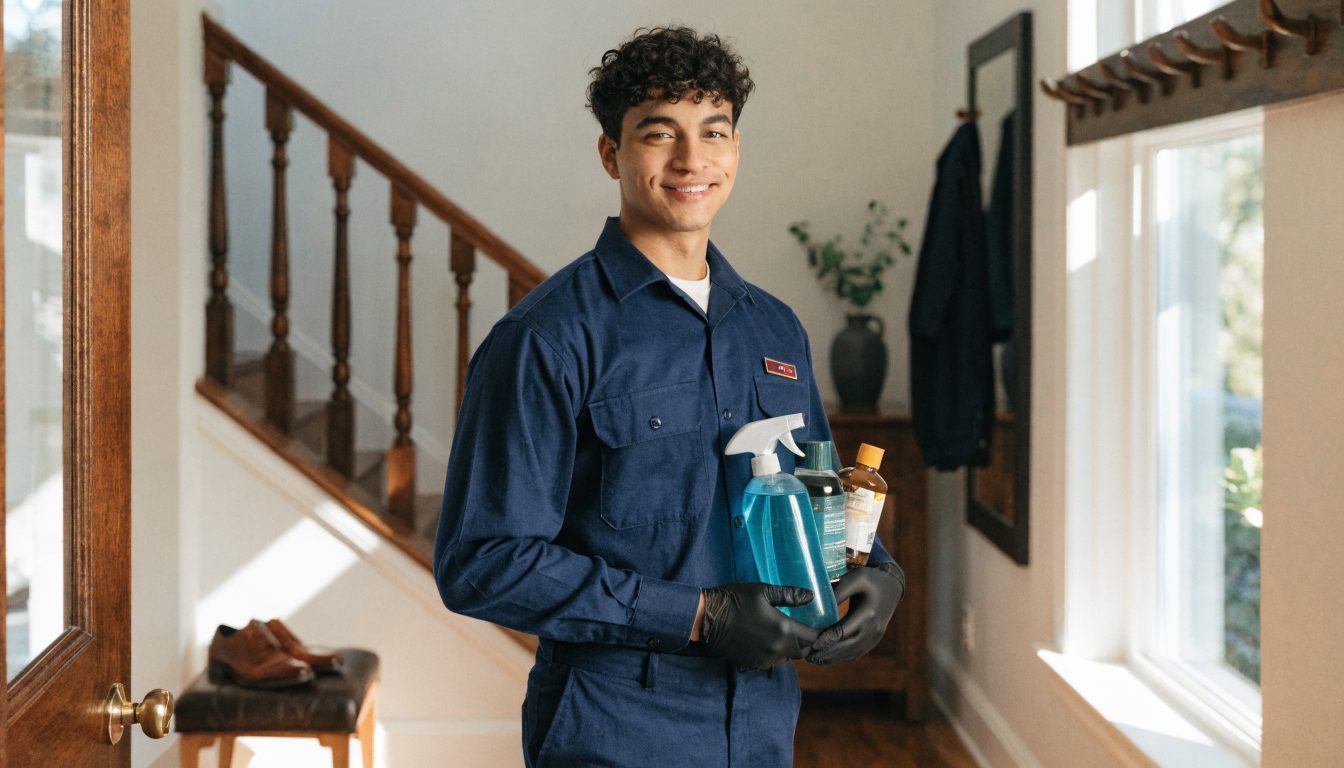
"EPA-approved" typically refers to disinfectant products registered with the EPA under specific pathogen-kill claims, which is a legally meaningful designation you can verify by registration number. "Eco-friendly" has no standardized legal definition and is used loosely in marketing — the more reliable signals are specific, verifiable claims like third-party certifications (Green Seal, EPA Safer Choice) rather than the word "eco-friendly" or "natural" alone on a label.
What 'EPA-Approved' Actually Means
Unlike "eco-friendly," this term has a specific, checkable meaning. Disinfectant products intended to kill specific pathogens must be registered with the EPA, which assigns each product an EPA registration number and requires supporting data for the specific kill claims on the label (for example, effectiveness against particular bacteria or viruses after a specified contact time). You can verify a product's registration directly through the EPA's public database — a real registration number is a genuinely meaningful signal, unlike most other label language.
It's worth noting this designation applies specifically to disinfecting claims, not to a product's overall safety or environmental impact — a product can be legitimately EPA-registered as an effective disinfectant while still containing ingredients some households prefer to avoid for other reasons.
What 'Eco-Friendly' Actually Means (Often, Not Much)
Unlike EPA registration, "eco-friendly," "green," and "natural" have no standardized legal definition in cleaning product marketing. A manufacturer can apply these terms with almost no independent verification required. That doesn't mean every product using this language is misleading — but it does mean the label alone isn't reliable evidence, and it's worth looking for more specific, verifiable claims.
More Reliable Signals to Look For
- Third-party certifications like Green Seal or EPA Safer Choice, which require independent verification against specific published criteria — unlike self-applied marketing language.
- Full ingredient disclosure. Products that list complete ingredients (not just "plant-derived surfactants" or similarly vague language) allow for actual evaluation rather than requiring trust in a marketing claim.
- Specific, checkable claims rather than general language — "biodegradable within 28 days per OECD 301 testing" is verifiable; "environmentally friendly" is not.
How This Plays Out in Practice
The most sensible approach combines both concerns rather than treating them as opposites: genuinely effective disinfection where it matters (bathrooms, kitchens, high-touch surfaces) using EPA-registered products, paired with gentler, well-verified products for general surface cleaning where heavy disinfection isn't necessary. This is the balance most professional cleaning services — including ours — actually apply, rather than defaulting entirely to one category or the other.
Ready to Skip Straight to Clean?
Our insured, background-checked team handles it — get a free, firm quote based on your actual home, usually within one business hour.
Get Your Free Quote